
In the industrial printing sector, the choice between flexographic printing and rotogravure is one of the most recurring dilemmas for entrepreneurs and production managers. Both are established technologies and both offer high-level results, but they respond to deeply different industrial logics.
Understanding the real difference between flexographic and rotogravure printing does not mean deciding which one is “absolutely better,” but understanding which technology best fits your production model, volumes, materials, and economic goals.
In this article, we analyze clearly and concretely:
how the two technologies work,
where the real operational differences are,
when flexography is the right choice,
when rotogravure still makes sense,
and why many companies today are rethinking their printing choices.
What is flexographic printing
Flexographic printing is a rotary process that uses flexible photopolymer plates mounted on cylinders. Ink is transferred through an anilox roller and applied directly to the substrate.
It is an extremely versatile technology, used for:
flexible packaging,
labels,
plastic films (PE, PP, PET),
paper and cardboard,
laminated materials.
In recent years, the evolution of flexographic presses (gearless systems, digital register control, and setup automation) has brought flexography to very high quality levels, drastically reducing the historical gap with rotogravure.
What is rotogravure printing
The rotogravure process is based on engraved cylinders (copper or composite materials) that transfer ink directly onto the substrate. Each cylinder corresponds to one color and is engraved with extreme precision.
Rotogravure is historically known for:
very high print quality,
deep color rendering,
excellent continuity on very long runs.
It is a technology typically used for large standardized volumes, where the initial investment in cylinders is amortized over very long production runs.
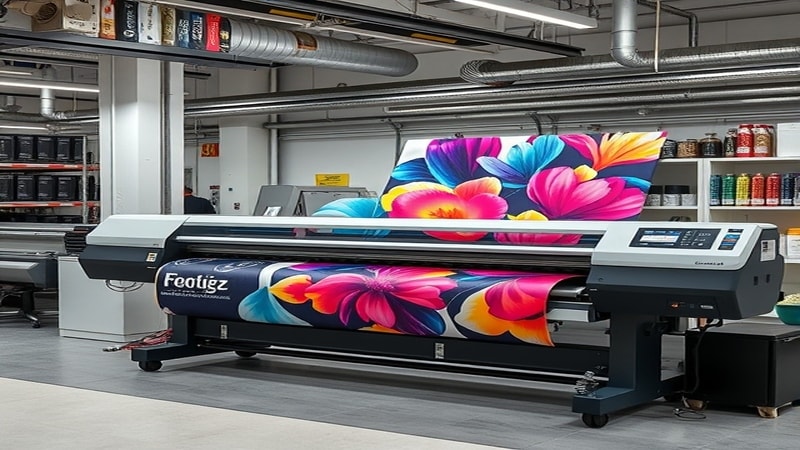
Understanding the difference between flexographic printing and rotogravure means making an industrial choice, not an ideological one. Today, flexography has reached a technological level that allows it to cover most industrial applications, offering flexibility, efficiency, and economic control.
For many companies, investing in modern flexographic machines means not only printing better, but also managing their business better in an increasingly competitive and unpredictable market.

Operational differences between flexographic printing and rotogravure
-
1. Starting costs:
Rotogravure: It requires engraved cylinders, expensive and with long construction times. The initial investment is high, justifiable only on large scales.
Flexographic printing: Use flexible clichés with significantly lower costs and faster preparation times.
Flexography advantage: for medium-low productions, variable batches and frequent changes. -
2. Production flexibility:
Rotogravure: It is not flexible: any graphical or format variation involves the creation of new cylinders.
Flexographic printing: It allows faster work changes, greater adaptability to product variants and customizations.
Flexography advantage: in dynamic markets driven by time-to-market. -
3. Production volumes:
Rotogravure: Expresses the maximum convenience on very long and repetitive pulls.
Flexographic printing: It is competitive on a much wider range of volumes, from medium to large, without excessive penalties on unit costs.
Flexography advantage: Rotogravure remains efficient on huge volumes, but flexography today covers most real industrial needs.
-
4. Printing quality:
Rotogravure: Historically, rotogravure was considered superior from a qualitative point of view. Today this assumption must be resized.
Flexographic printing: Modern industrial flexographic machines guarantee: precise register, high color quality, print uniformity on thin films.
Flexography advantage: In many packaging and label applications, the visual difference is now minimal or nothing. -
5. Sustainability and waste:
Rotogravure: Incision of cylinders, intensive use of solvents, increased production rigidity.
Flexographic printing: Reduction of waste, possibility of using water-based inks, greater compatibility with sustainable materials.
Flexography advantage: from an ESG and environmental compliance perspective.
When rotogravure still makes sense
Would you be ready to break down times and production costs by increasing profitability?
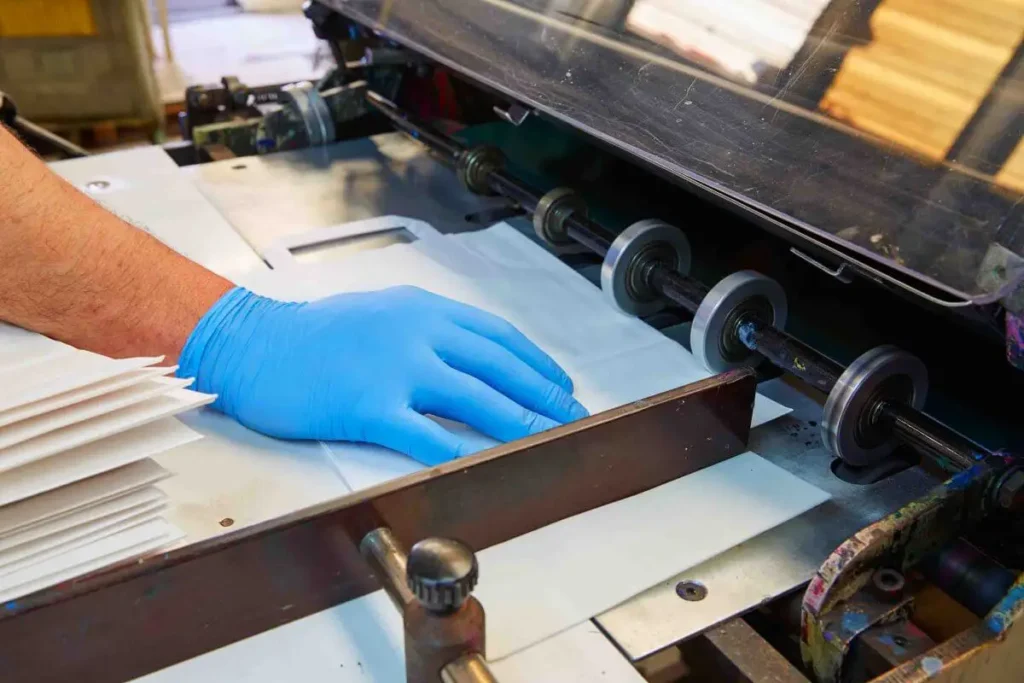
In recent years, many companies have been moving from rotogravure to flexographic printing for concrete reasons:
greater commercial flexibility,
reduction of starting costs,
faster response to the market,
integration with digitalized processes,
lower financial risk related to cylinder costs.
Modern flexographic presses are no longer a compromise solution, but a strategic technology for companies seeking to combine quality, productivity and adaptability.
The real difference between flexographic and rotogravure printing is not in the technology itself, but in the context in which it is used.
If your business requires:
frequent product changes,
differentiated lots,
fast time-to-market,
control of initial costs,
flexographic printing is now the most rational and sustainable choice.
If instead you work on:
extremely long production runs,
stable graphics for years,
low-variability markets,
rotogravure can still play a role.
Ofem: Your Partner in Flexographic Printing
We will be happy to answer any questions you may have and help you best meet your needs.
How we will support you:
- Always attentive to the customer
- Ready to serve you best
- Over ten years of experience
- Results-oriented
- Problem solving at its finest
- Transparent consultancy
What happens next?
Let’s arrange a no-obligation phone call
We plan one or more meetings either on site or online
We will prepare a no-obligation proposal for you
Book a Free Consultation
FAQ
Editorial Q&A
Q: What is the most common mistake when evaluating Flexographic Printing vs Rotogravure: What Is the Real Difference??
A: The most common mistake is evaluating only the purchase price and ignoring setup time, waste, and process consistency.
Q: How can we measure whether Flexographic Printing vs Rotogravure: What Is the Real Difference? is improving production performance?
A: Track startup waste, stable-speed output, repeatability across jobs, and intervention rate by operators.
Q: When does Flexographic Printing vs Rotogravure: What Is the Real Difference? become a strategic investment and not only a technical upgrade?
A: It becomes strategic when quality remains stable over time and process variability decreases across shifts.
Q: Which technical checks should be completed before scaling Flexographic Printing vs Rotogravure: What Is the Real Difference??
A: Validate substrate behavior, registration stability, downtime causes, and maintenance windows under real workloads.
Q: How do we keep Flexographic Printing vs Rotogravure: What Is the Real Difference? reliable after go-live?
A: Use a recurring checklist, assign clear ownership, and review machine and process KPIs on a fixed cadence.