
In the world of flexographic presses and flexographic machines, looking ahead does not mean chasing abstract technical trends. It means creating concrete value for companies that print every day. Ofem approaches this challenge with a clear strategy: turning next-generation opportunities into practical solutions for packaging, labels, and technical-film production.
Innovation is not an end in itself. It is the ability to respond to market shifts before they become production problems, through technologies, methods, and relationships that improve day-to-day operations for companies using flexographic presses.
Growth and transformation: from disruption to opportunity in flexographic printing
Recent industrial history has shown that companies that do not simply react to disruption, but use it to innovate, are the ones that achieve stronger results. Ofem follows this approach: moments of change are treated as opportunities to anticipate market demand, not obstacles to avoid.
In an uncertain global context, where technology and production needs evolve quickly, the ability to differentiate products and processes becomes a decisive factor for those designing flexographic machinery. It is not about adding features; it is about interpreting market transformation and translating it into real, sustainable customer benefits.
The Ofem vision: digitalization, relationship quality, and innovation in flexography
At the center of this strategy is digital innovation applied to flexographic machinery and business processes, not as a trend but as a lever to accelerate response times and improve service quality.
Value-oriented innovation
For Ofem it is not enough to develop technologies: the goal is increase the value perceived by the customer through solutions that improve efficiency, reduce waste and allow you to address complex print demands with safety and repeatability, from plastic films to composite materials.
Digitalization of business processes
Digitization is not only about the machine, but the entire cycle of relationship with the customer:
dalla richiesta iniziale,
to the management of orders,
to proactive technical assistance.
This digital approach allows a greater transparency and traceability, fundamental when talking about complex industrial machines.
Direct relationship with the customer
Ofem focuses the customer, not as a passive recipient of a technology, but as active part of a continuous innovation process. Digital technology is used precisely reduce distance, not to replace the human relationship that remains essential to understand complex needs.
Transforming opportunities into products: the philosophy of “productization”
The term “productize” may seem abstract, but in an industrial context it means turning new ideas and technology trends into real, usable, profitable products. In Ofem’s case, this translates into:
1. Analysis of application trends
Today, the market requires flexographic printing solutions that are:
adaptable to different materials,
efficient on variable volumes,
integrated with digital control systems.
Only by analyzing these trends can you build a machine that is not only powerful, but also effective and productive.
2. Development of results-oriented technologies
A feature list is not enough; you need measurable benefits:
waste reduction,
shorter startup times,
predictive production control.
This allows customers to achieve real productivity and competitiveness, not vague promises.
3. Internal alignment to ensure execution
Innovation creates value only when the people building it are aligned around the same goals. For Ofem, promoting a people-first culture means ensuring that technical, engineering, and commercial skills work together to transform market needs into tangible solutions.
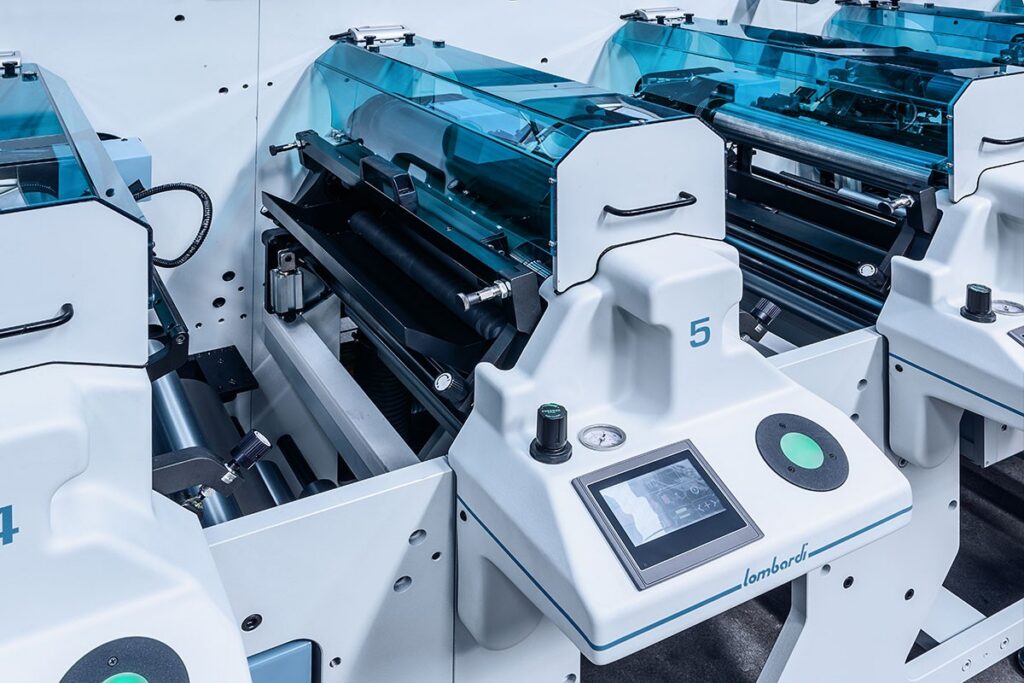

Innovation in flexographic printing: concrete benefits for industry
- Increased production efficiency: A flexographic machine equipped with integrated digital systems and designed with innovative methodologies offers: better process control, waste reduction, and smarter material management.
- Less downtime: An innovative approach also includes preventive diagnostic and maintenance tools that reduce unplanned stoppages.
- Data-based production decisions: With advanced digital technologies, the operator has access to real data on the process, which can drive smarter and optimized decisions.
The market for flexographic machines and presses is evolving rapidly. Companies that can interpret technological opportunities and convert them into real products with measurable advantages will lead the industry in the coming years.
Ofem’s approach to digital transformation and methodological innovation is not theoretical. It is a practical strategy applied to the needs of industrial producers and printers, with the goal of increasing competitiveness, efficiency, and customer value.
Innovation does not mean adding technology for its own sake. It means delivering solutions that help companies do better, faster, and with less waste in a market that demands continuously higher performance and reliability.
flexographic press: from simple production tool to competitive asset for the company.
Our flexographic presses: competitive asset!
Ofem: Your Partner in Flexographic Printing
We will be happy to answer any questions you may have and help you best meet your needs.
How we will support you:
- Always attentive to the customer
- Ready to serve you best
- Over ten years of experience
- Results-oriented
- Problem solving at its finest
- Transparent consultancy
What happens next?
Let’s arrange a no-obligation phone call
We plan one or more meetings either on site or online
We will prepare a no-obligation proposal for you
Book a Free Consultation
FAQ
Editorial Q&A
Q: What is the most common mistake when evaluating Practical Solutions for Flexographic Machinery: Innovate to Grow?
A: The most common mistake is evaluating only the purchase price and ignoring setup time, waste, and process consistency.
Q: How can we measure whether Practical Solutions for Flexographic Machinery: Innovate to Grow is improving production performance?
A: Track startup waste, stable-speed output, repeatability across jobs, and intervention rate by operators.
Q: When does Practical Solutions for Flexographic Machinery: Innovate to Grow become a strategic investment and not only a technical upgrade?
A: It becomes strategic when quality remains stable over time and process variability decreases across shifts.
Q: Which technical checks should be completed before scaling Practical Solutions for Flexographic Machinery: Innovate to Grow?
A: Validate substrate behavior, registration stability, downtime causes, and maintenance windows under real workloads.
Q: How do we keep Practical Solutions for Flexographic Machinery: Innovate to Grow reliable after go-live?
A: Use a recurring checklist, assign clear ownership, and review machine and process KPIs on a fixed cadence.