
DH-ROC: modular flexographic printing engineered to scale with production
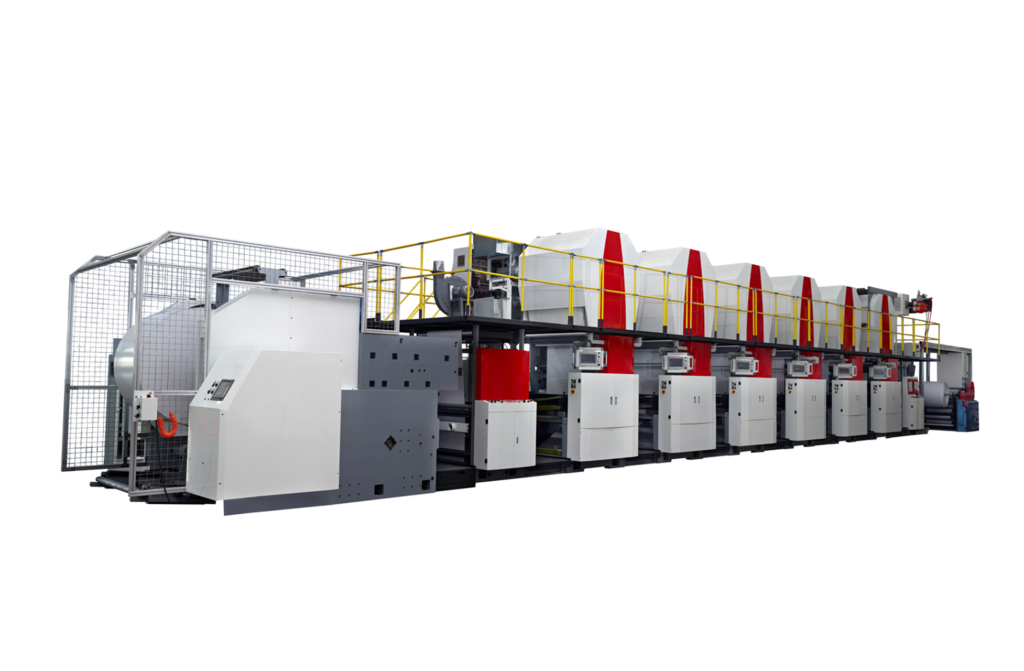
The DH-ROC modular flexographic press is designed for industrial flexographic printing in environments where flexibility, process customisation and long-term scalability are strategic requirements.
DH-ROC is built as a modular platform, not as a rigid machine adapted later, and allows the print line to be configured around real production needs, today and tomorrow.
It is a solution for companies operating across multiple applications, substrates and formats, and needing a flexographic press that can adapt to the process, rather than impose constraints.
This reflects the Ofem design approach: making flexographic printing scalable, controllable and sustainable over time.
Ideal DH-ROC applications
labels and tags,
packaging and wrapping,
food industry,
cosmetics and personal care,
chemical and technical products,
retail and consumer goods.
In all these contexts, DH-ROC helps manage production variability while maintaining process control and print quality.
DH-ROC 880
Number of print units: up to 12
Web width: 600-900 mm
Print repeats: 350-800 mm
Production speed: 250-450 m/min
Inks: solvent-based, water-based, UV
DH-ROC 8105
Number of print units: up to 12
Web width: 1000-1600 mm
Print repeats: 450-1100 mm
Production speed: 300-450 m/min
Inks: solvent-based, water-based, UV
Modular flexographic printing when variability is the rule
Choosing a modular flexographic press such as DH-ROC is a technical decision, not an opportunistic one.
It is the right solution when the print process is characterised by:
frequent job changes,
different substrate types,
variable configuration requirements,
progressive growth in production volumes,
integration with in-line modules and operations.
In these contexts, a rigid machine quickly becomes a limitation. DH-ROC is engineered to absorb complexity, not to suffer from it.
Ofem approach to modular DH-ROC:
DH-ROC is designed from one key principle:
modularity must be structural, not accessory.
Each unit and module is engineered to operate coherently within the line while maintaining:
print process stability,
register control,
consistent quality even with variable configurations,
long-term operational repeatability.
DH-ROC is not a machine that “can be expanded”.
It is a flexographic press designed to be expanded.

Key features
of the DH-ROC
flexographic printing press
Native modular architecture
The machine is built as a modular platform, configurable by number of units, functional modules and production layout.
Real application flexibility
DH-ROC supports different flexographic print applications without sacrificing process stability and quality.
Scalable investment model
The line can be expanded and upgraded over time, aligning investment with real production growth.
Process stability even in complex configurations
Despite its modular architecture, the process remains controlled and predictable, avoiding the instability typical of improvised modular solutions.
Integration into existing production workflows
DH-ROC is designed to integrate into operating lines without disrupting layout and organisation.
1. Native modular architecture
The machine is designed as a modular platform, not as an adapted fixed structure.
Benefit: print-process configuration tailored to your needs.
Why us: because we engineer modularity as a structural foundation, not as an added option.
2. Progressive line scalability
Ability to expand and upgrade the machine over time.
Benefit: investment aligned with real production growth.
Why us: because we avoid forcing customers to replace the machine when business evolves.
3. Process stability with variable configurations
Process control is maintained even with complex or modified layouts.
Benefit: consistent print quality across different applications.
Why us: because Ofem modularity does not compromise register control.
4. Reduced production constraints
The machine adapts to different jobs without technical forcing.
Benefit: higher equipment utilisation and stronger operational flexibility.
Why us: because we build the machine around the customer process, not the opposite.
5. Integration with existing modules and lines
Compatibility with already operational production workflows.
Benefit: faster adoption and production continuity.
Why us: because we design around real plants, not ideal lines.
6. Long-term investment value
Structure engineered to last and adapt to new requirements.
Benefit: stronger ROI and lower obsolescence risk.
Why us: because DH-ROC is designed to remain competitive, not to be replaced early.
Ofem: Your Partner in Flexographic Printing
We will be happy to answer any questions you may have and help you best meet your needs.
How we will support you:
- Always attentive to the customer
- Ready to serve you best
- Over ten years of experience
- Results-oriented
- Problem solving at its finest
- Transparent consultancy
What happens next?
Let’s arrange a no-obligation phone call
We plan one or more meetings either on site or online
We will prepare a no-obligation proposal for you