
Flexographic printing machines: how to choose the right solution for industrial production
In modern industrial printing, flexographic printing machines are no longer a marginal option, but a core technology for packaging, labels, and flexible materials.
For companies that want to increase production capacity, quality control, and overall profitability, understanding which flexographic presses to choose and why is crucial.
In this article we analyze:
what flexographic printing means in industrial production,
the main types of flexographic machines,
how to evaluate flexographic press performance,
the concrete benefits of a well-implemented technology,
and why Ofem is a practical partner for companies aiming for measurable results.
What flexographic printing is and why it matters today
Flexographic printing is a rotary process that uses flexible plates to apply ink directly onto the substrate. This technology is particularly suited for production on:
plastic films (PE, PP, PET),
paper and cardboard,
laminated materials,
technical industrial substrates.
The growth of flexographic printing has been driven by three key needs:
Production speed: it can run at high speed with continuity.
Unit-cost efficiency: for medium/high production volumes, cost per printed meter is competitive.
Application flexibility: it supports a wide range of materials and formats without frequent technology changes.
For this reason, flexographic printing is often the first choice in markets where print quality and industrial productivity must coexist with tight competitive margins.
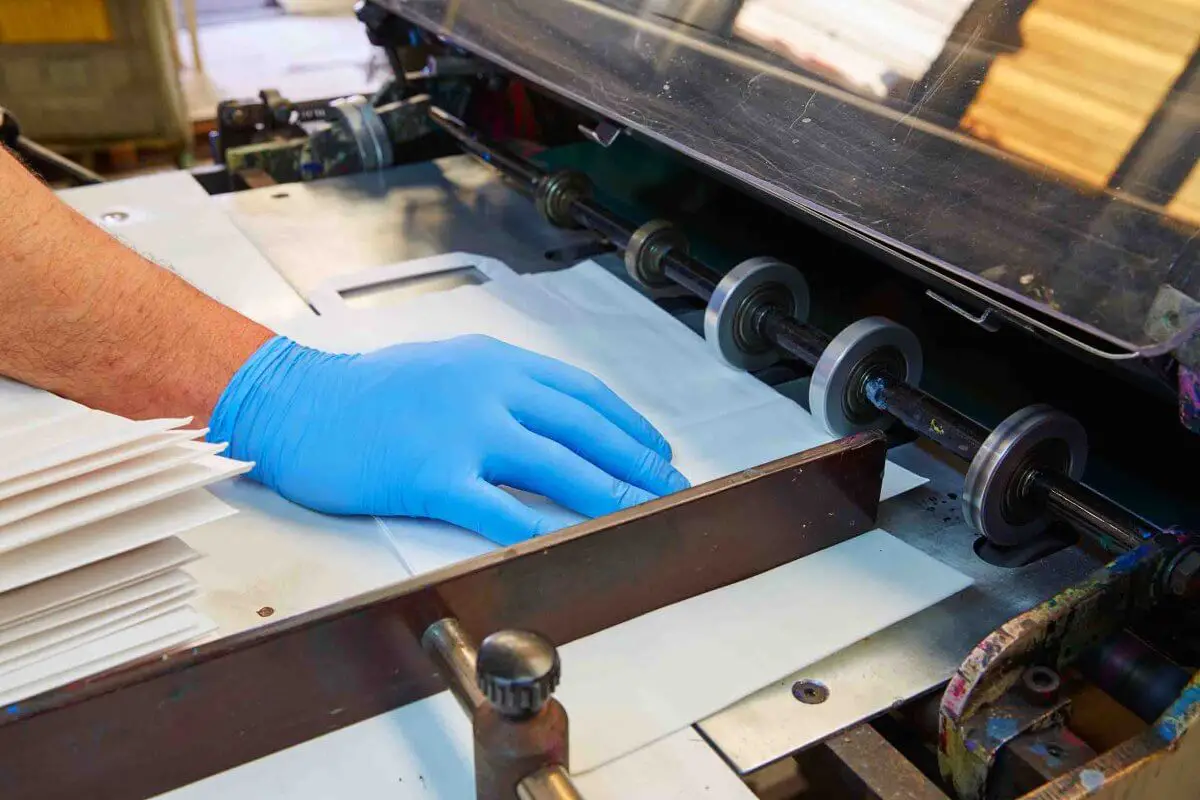
Types of flexographic machines: choose the right one
There is no single “ideal flexographic machine” for every production scenario. The right choice depends on the finished product, the substrate, and production volumes. The main machine architectures are:
Central drum flexographic presses (CI)
CI (Central Impression) machines use one central drum that keeps the substrate in continuous contact throughout printing.
Why choose them
Better color-register control.
Superior performance on thin films and technical substrates.
Consistent print uniformity on long runs.
This architecture is ideal when print stability and quality are essential requirements, for example in food packaging and advanced technical materials.
Modular flexographic presses (in-line)
Modular solutions allow you to add or remove printing, drying, or finishing units directly on the main line.
Main advantages
High production flexibility.
Ability to customize the machine based on each production order.
Configurations that can be upgraded over time.
They are particularly suitable for dynamic applications where printing requirements and materials change frequently.
Stack flexographic presses
Stack machines arrange print units vertically and operate with independent cylinders.
Why choose them
Fast operational accessibility.
Simplified maintenance and setup.
Good performance on medium-rigid substrates such as paper and carton.
This configuration is often chosen for labels and medium-to-large packaging production, where operational simplicity and time-to-market are top priorities.
Flexographic printing machines are today essential tools for industrial production, especially when the quality, speed and sustainability of processes determine the competitiveness on the market. Choosing the right flexographic press means looking in addition to fine technology itself: means evaluating process, support, scalability and economic return over time. Ofem brings solutions to the market that meet these real needs, offering not only technology, but durable industrial value.
What really matters in an industrial flexographic press
When evaluating the purchase or renewal of a flexographic printing machine, it is not enough to look at maximum speed or number of colors. The factors that truly determine profitability and competitiveness include:
1. Process stability
A flexographic machine must ensure production continuity without unpredictable variations in print quality. This means:
accurate register control,
intelligent web-tension management,
integrated control systems that minimize waste.
2. Easy setup and job changeover
Fast setup reduces unproductive time and increases real machine productivity. In contexts with many SKUs and frequent changes, this is a concrete efficiency lever.
3. Operational efficiency
The machine must be designed to reduce waste (material and ink) and optimize human-resource usage, supporting standardized and repeatable workflows.
4. After-sales support
A reliable partner does not stop at machine delivery. It must provide:
fast technical support,
operational training,
remote diagnostics,
spare-parts availability.
This combination determines the total cost of ownership (TCO), which is often more important than the purchase price.
The real benefits of flexographic machines in industrial production
Investing in modern flexographic machines enables concrete competitive advantages:
A. Higher real productivity
Advanced architectures help maintain continuous output, increasing printed meters per worked hour.
B. Waste reduction
More stable and controlled processes reduce print defects, rework, and discarded material costs.
C. Operational scalability
Modular and configurable solutions allow the company to grow without disrupting existing infrastructure.
D. Better resource utilization
Automation and job presets reduce dependence on highly specialized staff, making the process more uniform and less variable.
Why choose Ofem for flexographic printing machines
Ofem does not offer only flexographic machines, but technology solutions tailored to each company’s production needs. This means:
designing scalable modular solutions, not just generic standard configurations,
providing advanced process control for stability and consistent quality,
planning assistance and operational support to keep print-line availability high.
Whether it is central-drum flexographic presses, modular machines, or stack configurations, the philosophy is always the same: put the operator and production process at the center, not technology for its own sake.
Ofem: Your Partner in Flexographic Printing
We will be happy to answer any questions you may have and help you best meet your needs.
How we will support you:
- Always attentive to the customer
- Ready to serve you best
- Over ten years of experience
- Results-oriented
- Problem solving at its finest
- Transparent consultancy
What happens next?
Let’s arrange a no-obligation phone call
We plan one or more meetings either on site or online
We will prepare a no-obligation proposal for you
Book a Free Consultation
FAQ
Editorial Q&A
Q: What is the most common mistake when evaluating Ofem: Machinery and Presses for Industrial Flexographic Printing?
A: The most common mistake is evaluating only the purchase price and ignoring setup time, waste, and process consistency.
Q: How can we measure whether Ofem: Machinery and Presses for Industrial Flexographic Printing is improving production performance?
A: Track startup waste, stable-speed output, repeatability across jobs, and intervention rate by operators.
Q: When does Ofem: Machinery and Presses for Industrial Flexographic Printing become a strategic investment and not only a technical upgrade?
A: It becomes strategic when quality remains stable over time and process variability decreases across shifts.
Q: Which technical checks should be completed before scaling Ofem: Machinery and Presses for Industrial Flexographic Printing?
A: Validate substrate behavior, registration stability, downtime causes, and maintenance windows under real workloads.
Q: How do we keep Ofem: Machinery and Presses for Industrial Flexographic Printing reliable after go-live?
A: Use a recurring checklist, assign clear ownership, and review machine and process KPIs on a fixed cadence.