
How Ofem’s organization creates competitive value in flexographic production
In the competitive world of industrial flexographic machines, differentiation comes not only from machine technology, but from how a company is structured to design, manufacture, and support that technology. For Ofem, the key is not the idea of a “perfect machine,” but an effective organization that aligns resources, processes, and technical capabilities to generate real, sustainable customer value.
Organization and production are concrete operational levers. They determine machine quality, response speed to market changes, and the ability to provide high-level after-sales service. This is how Ofem supports industrial companies looking for efficiency, quality, and operational continuity.
The challenge in the flexographic-machine market
The flexographic press market is characterized by:
high customization requirements,
competitive delivery timelines,
rapid technological evolution,
the need to integrate with complex customer production systems.
In such a dynamic environment, traditional organization is not enough. Agile processes, clear responsibilities, and result-oriented capabilities are required.
Ofem addresses this challenge through an integrated organization that supports every lifecycle phase of flexographic machines, from design to production to technical assistance.
An organizational model connected to real production
Ofem’s structure is not rigidly hierarchical; it works as an interconnected team ecosystem with clear responsibilities and a common focus: delivering concrete value to end users of flexographic presses.
Design and engineering
The engineering department works in close connection with:
the commercial team, to understand real market needs;
the production team, to ensure each concept is feasible and optimized;
the service team, to integrate field experience into technical decisions.
This cross-functional collaboration reduces project errors, shortens development cycles, and increases machine reliability.
Slim production and quality control
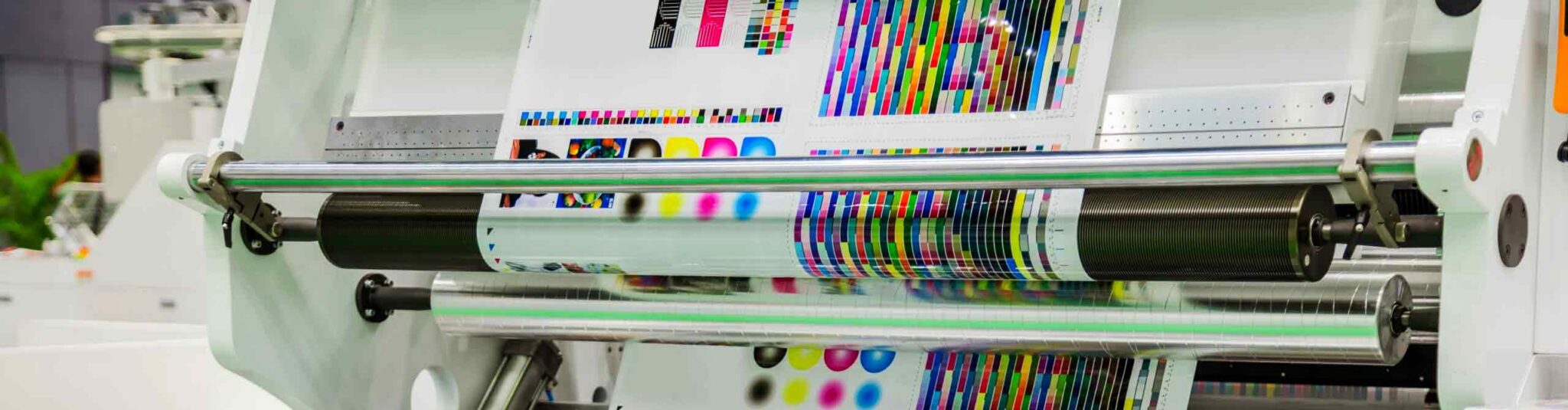
Flexographic-machine production follows lean, standardized processes to reduce variability and waste. Quality control is not a final-stage check: it is embedded in every production phase to ensure consistency between design intent and final machine performance.
Machine quality is not only a technical value, but a competitive advantage for customers that require:
durable print stability,
repeatable configurations,
interoperability with existing lines.
This production structure is a differentiator for Ofem because it delivers uncompromised industrial quality.
Technical support and after-sales service
An effective organization does not end at machine delivery. For buyers of flexographic presses, after-sales support is essential: training, maintenance, and fast assistance.
Ofem’s technical support organization provides:
prompt remote assistance,
on-site interventions when needed,
software updates and calibration services.
This enables customers to maintain high production availability and reduce unproductive downtime.
How organization supports innovation
An efficient structure is also a continuous innovation engine. In the flexographic-machine market, this means evolving toward:
advanced digital print control,
integration with process sensors,
automation that reduces setup time and errors.
Ofem promotes innovation through:
cross-functional teams,
cyclical customer feedback,
R&D investments oriented to real production needs.
This results in flexographic machines that are not only fast and robust, but engineered to solve the concrete challenges plant managers face every day.
For the modern entrepreneur, understanding how a supplier organizes its own resources means understanding the solidity of the technological investment it is about to make. And for those who choose flexographic presses developed by a well-coordinated organisation, the benefits can be seen not only in the machines themselves, but also in production results and operating margins.
Organization and competitive advantage for customers
An organization is not an abstract value for those buying a flexographic machine: it is a factor that directly affects production results. In particular:
Shorter delivery lead times
A well-structured pipeline reduces delays and allows customers to plan the start-up of new production lines with greater confidence.
Effective customization
When the organization keeps engineering and production aligned, it becomes easier to provide tailored solutions without negatively affecting timing or costs.
Reliability and predictive maintenance
Integration between design and service makes it possible to provide support that goes beyond repair, anticipating maintenance needs and reducing machine downtime.
In the flexographic printing press market, differences between suppliers are not measured only by technical specifications. The real difference lies in a company’s ability to organize processes, people, and skills around clear customer-value goals.
The Ofem organization is designed to:
reduce inefficiencies,
promote innovation,
improve results for companies investing in flexographic technology.
Ofem: Your Partner in Flexographic Printing
We will be happy to answer any questions you may have and help you best meet your needs.
How we will support you:
- Always attentive to the customer
- Ready to serve you best
- Over ten years of experience
- Results-oriented
- Problem solving at its finest
- Transparent consultancy
What happens next?
Let’s arrange a no-obligation phone call
We plan one or more meetings either on site or online
We will prepare a no-obligation proposal for you
Book a Free Consultation
FAQ
Editorial Q&A
Q: What is the most common mistake when evaluating Ofem Corporate Organization for Industrial Flexographic Machinery?
A: The most common mistake is evaluating only the purchase price and ignoring setup time, waste, and process consistency.
Q: How can we measure whether Ofem Corporate Organization for Industrial Flexographic Machinery is improving production performance?
A: Track startup waste, stable-speed output, repeatability across jobs, and intervention rate by operators.
Q: When does Ofem Corporate Organization for Industrial Flexographic Machinery become a strategic investment and not only a technical upgrade?
A: It becomes strategic when quality remains stable over time and process variability decreases across shifts.
Q: Which technical checks should be completed before scaling Ofem Corporate Organization for Industrial Flexographic Machinery?
A: Validate substrate behavior, registration stability, downtime causes, and maintenance windows under real workloads.
Q: How do we keep Ofem Corporate Organization for Industrial Flexographic Machinery reliable after go-live?
A: Use a recurring checklist, assign clear ownership, and review machine and process KPIs on a fixed cadence.